How to Choose Custom Steering Wheel Colors: From Color Cards to the Real Thing
Use real builds in dark, brown, orange and white to understand steering wheel color pairing, center markers, textures and how to confirm physical color differences.

On this page
- 1. Set a color hierarchy before reaching for the brightest shade
- 2. Four pairings seen in real builds
- Black + dark texture
- Black + brown
- Black + orange
- Black + light colors
- 3. Color-card numbers are communication tools, not final color guarantees
- 4. Texture and gloss also change the sense of color
- 5. A practical color confirmation checklist
- FAQ
The steering wheel is the interior part you touch most often and one that is almost always in your field of view. A well-chosen color can echo the seats, door panels, trim strips and ambient lighting; a poor choice can lead to a wheel that “looks great in photos but feels wrong once installed.” TUTULE recommends treating the interior environment, material texture, stitching and sample approval as one connected decision.
1. Set a color hierarchy before reaching for the brightest shade
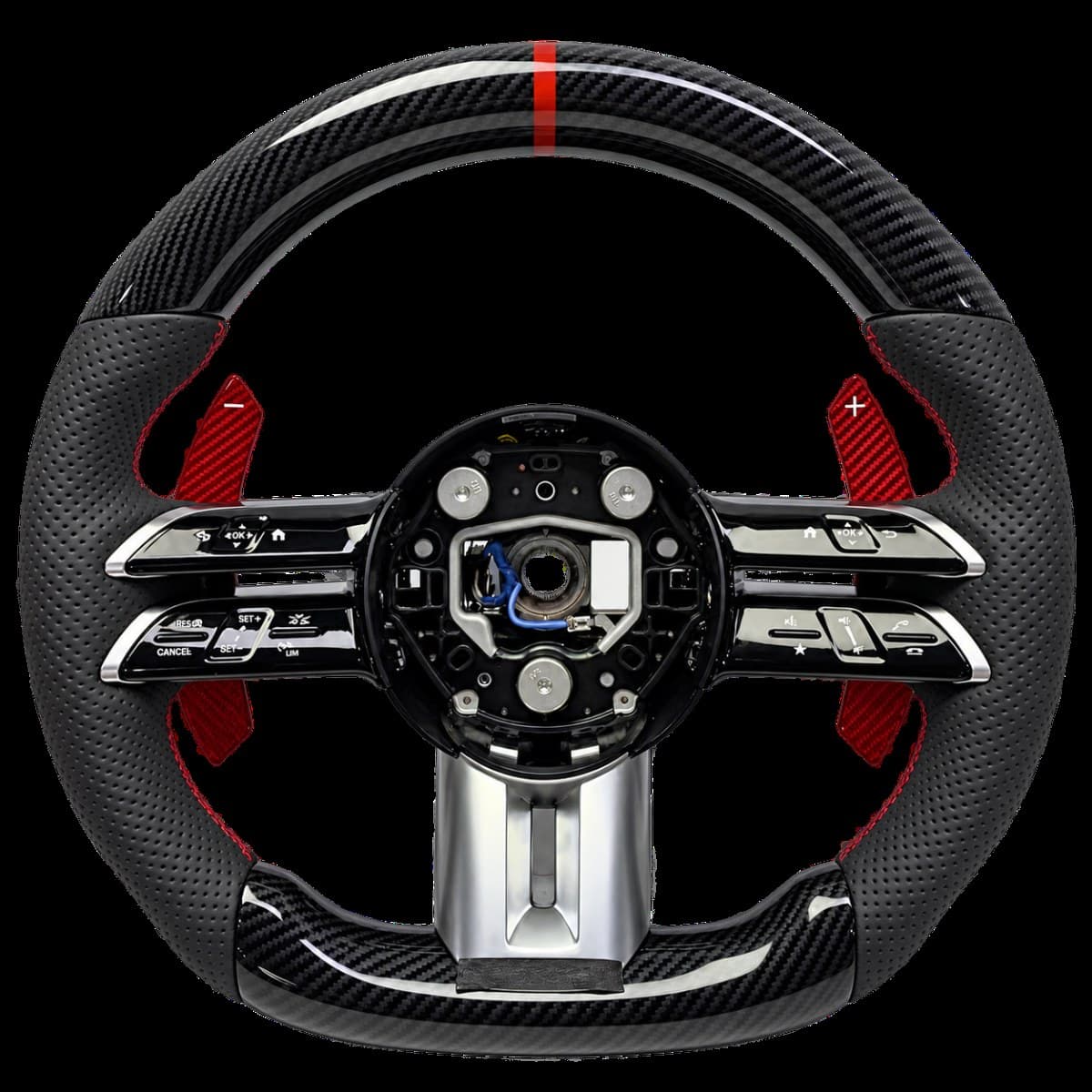
For most projects the appearance can be split into three layers: main color (the large grip zones), secondary color (finish panels or local splices) and accent color (the top center marker and stitching). If the cabin already has striking red or orange seats, the wheel does not necessarily need that color over a large area; using a close color only on the center marker and stitching can be the more coherent choice.
2. Four pairings seen in real builds
Black + dark texture
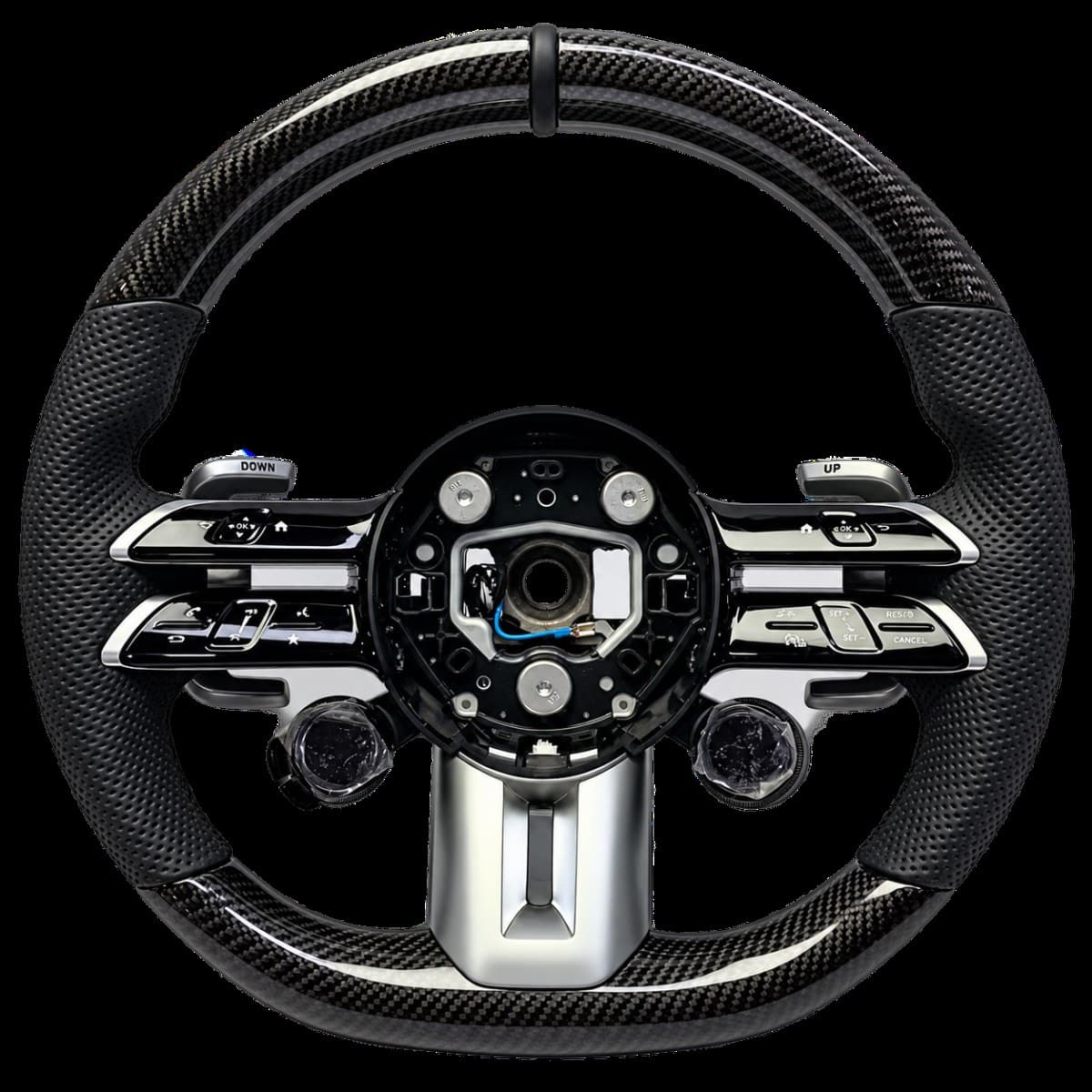
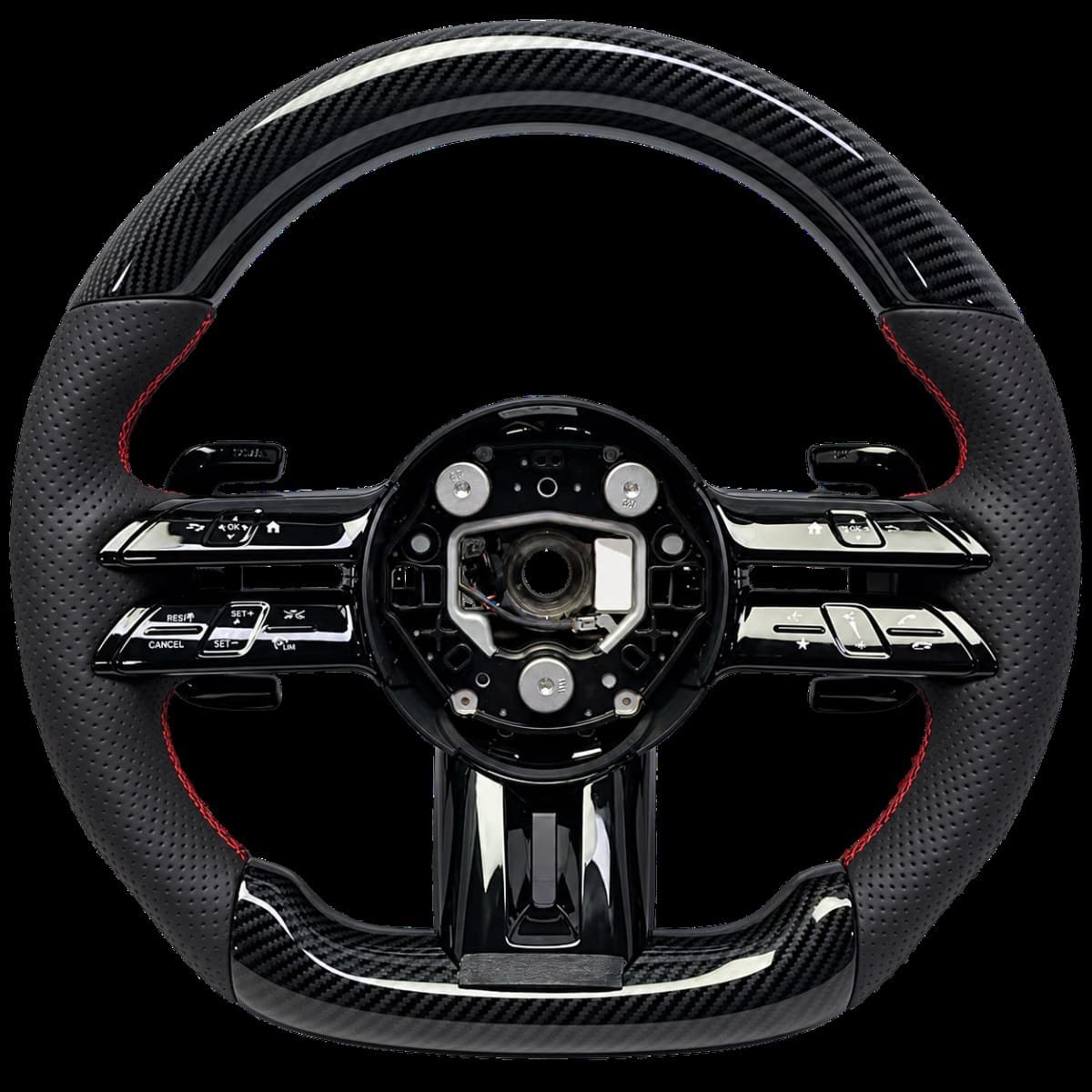
Close to the original dark interior overall; the weave only becomes clearly visible under reflected light. This is a low-risk starting point.
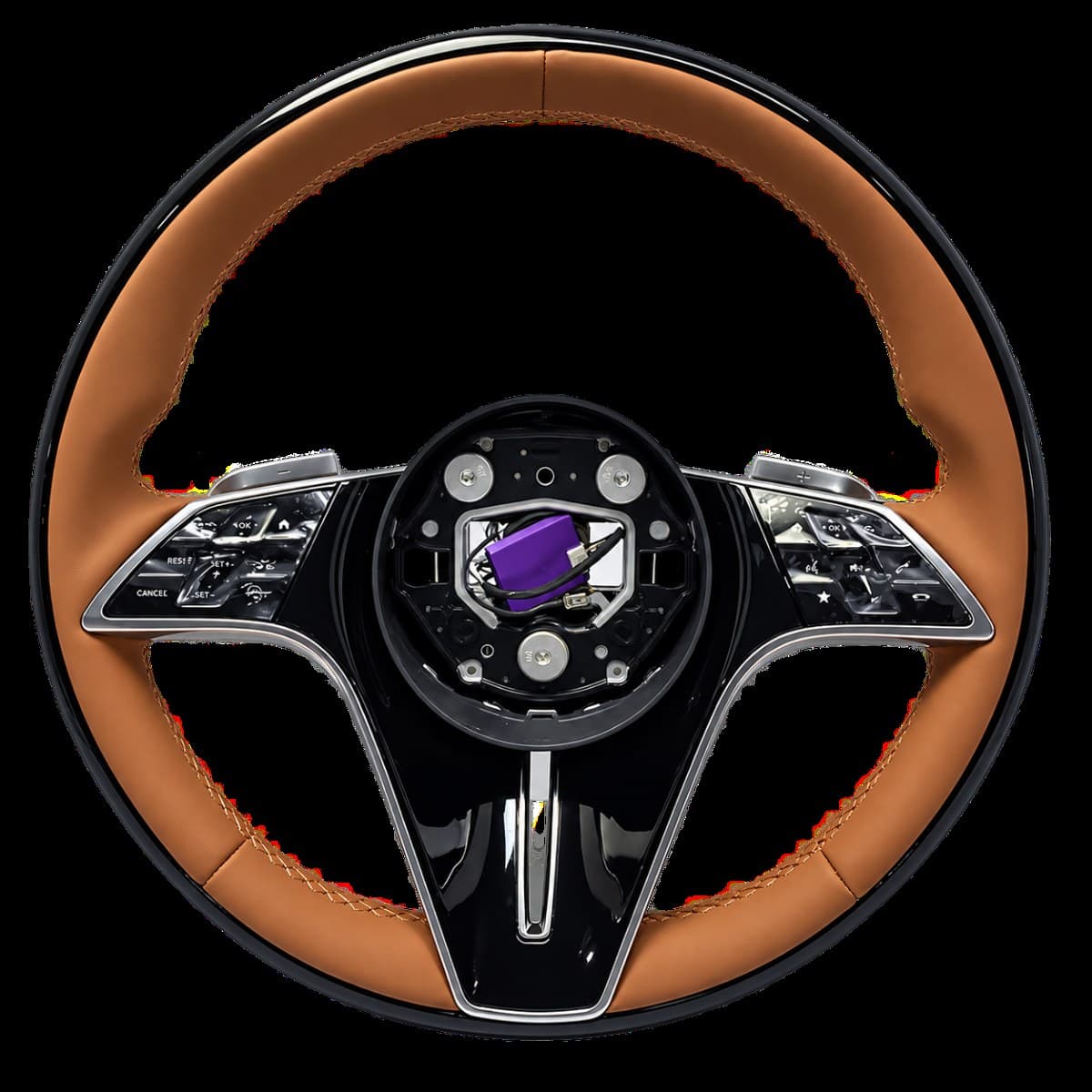
Black + brown
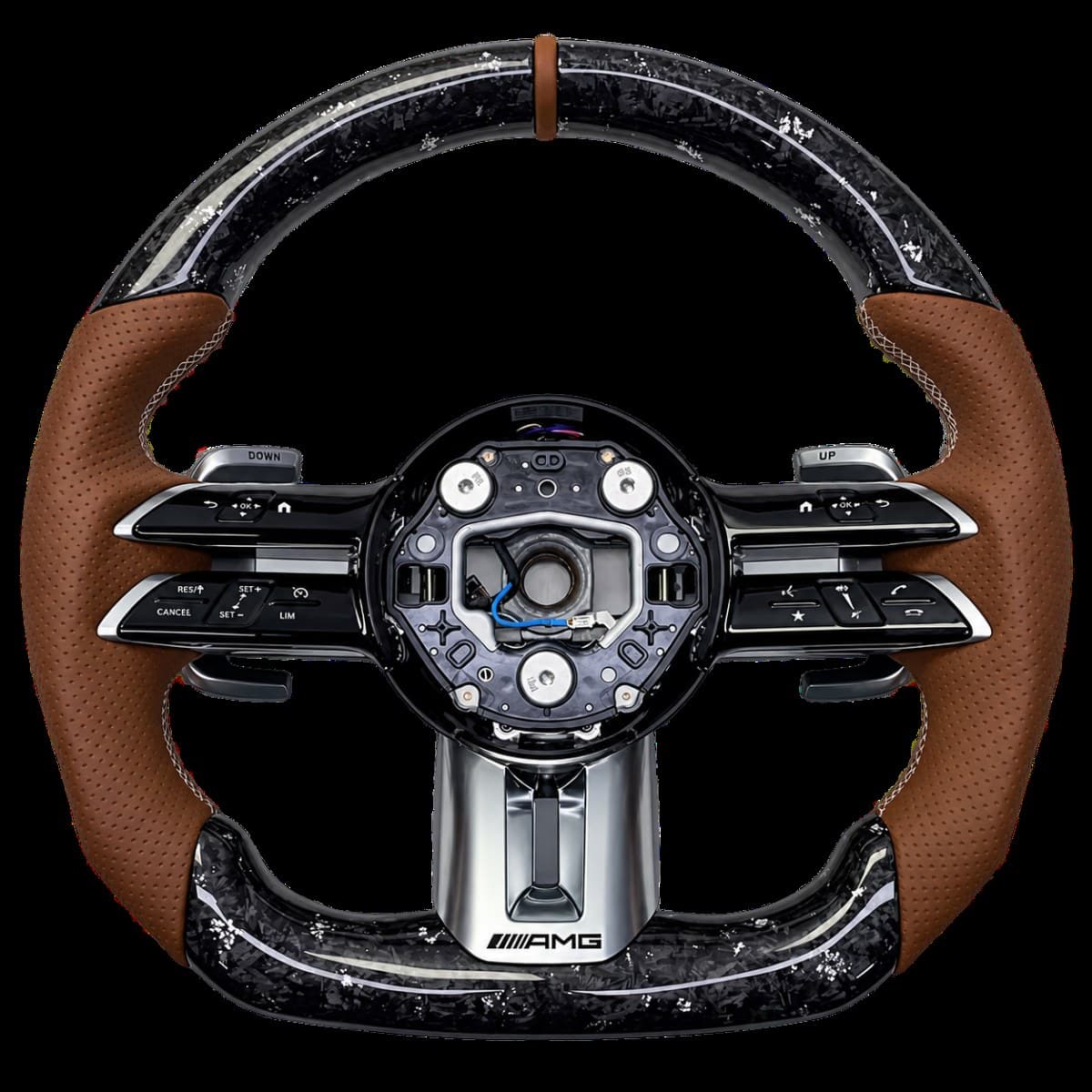
Brown zones add a warmer visual feel and can echo brown seats or wood trim. Pay particular attention to color differences between leather batches and surface finishes under lighting.
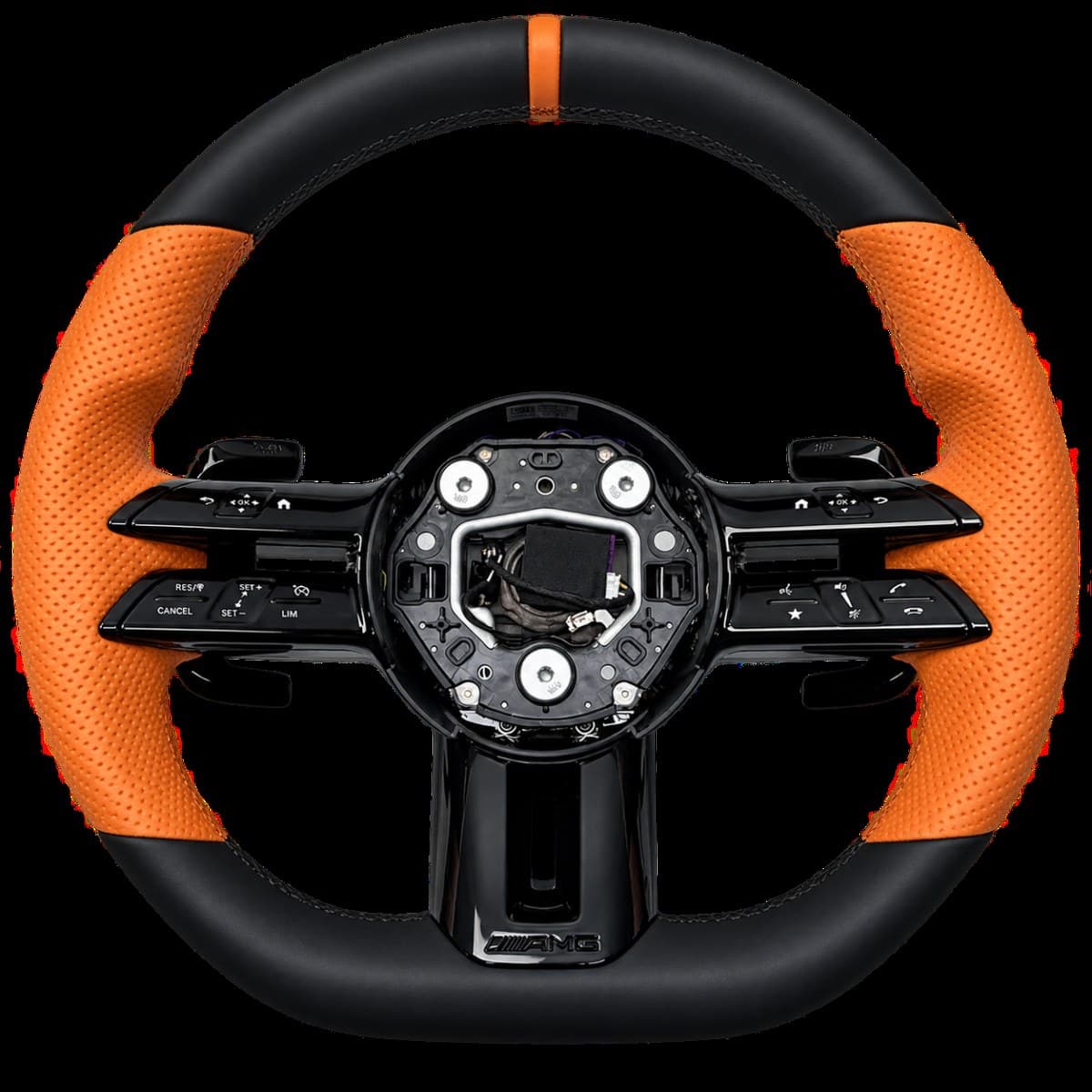
Black + orange
A high-contrast combination with strong recognition, suited to buyers actively pursuing individuality. To keep visual balance, keep the orange concentrated on the grip zones or the marker.
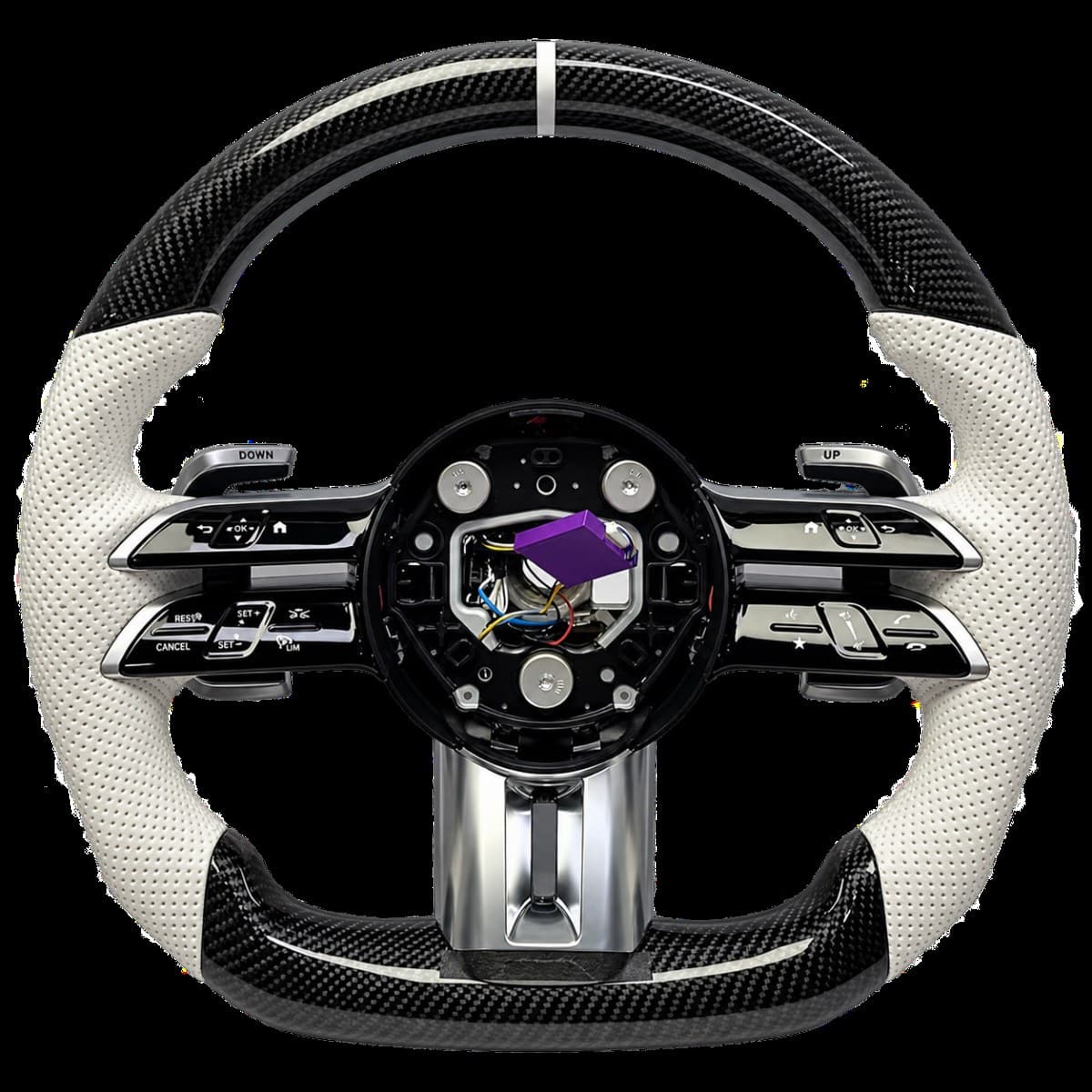
Black + light colors
Light-colored grips stand out in showcase photos, but daily use calls for advance planning around stains, contact wear and cleaning frequency.
3. Color-card numbers are communication tools, not final color guarantees
The color cards you provide contain many off-white, gray, brown, red and pink tones. Codes such as 9001, 9005, 9027 and 9031 should be recorded according to that card supplier’s internal system; they cannot be treated as cross-brand universal color standards. Screen rendering, printed cards, camera white balance and how strongly a material absorbs light all change the perceived color.
We recommend recording all of the following on the order: code, color name, material and surface texture, stitching color, reference images, and an agreed color-difference tolerance if the parties define one. Where possible, confirm a physical sample before volume production. Never finalize a volume color scheme from phone screenshots alone.
Preview your color scheme in the customizer
Use the TUTULE online customizer to preview grip colors, finishes and stitching, then send your vehicle details and color codes.
4. Texture and gloss also change the sense of color
The same black can appear at completely different brightness levels on fine leather, perforated surfaces, mirror finishes or visible woven texture. Separate “the color itself” from “the light-dark layers created by texture.” Your RM-series texture samples are a useful starting point for discussion, while the actual materials, processes and availability still need separate confirmation.
5. A practical color confirmation checklist
| Item | Material to provide |
|---|---|
| Vehicle environment | Photos of seats, door panels and dashboard, ideally in natural light |
| Main color | Color-card code plus reference photo |
| Secondary finish | Texture photos and expected gloss level |
| Stitching and center marker | Color, position, width and other requirements |
| Color approval | Physical sample or a mutually accepted approval process |
| Function and structure | Vehicle year, current wheel condition and functional needs |
FAQ
Will the color in photos match the physical product? Not necessarily. Screens, lighting and material surfaces all affect color rendering; the mutually confirmed sample or physical standard should prevail.
Can a dark wheel use colored stitching? It can be discussed as a design option, subject to confirming actual stitching supply and workmanship.
Can a reference photo be replicated exactly? The photo can guide the design discussion; actual execution is also bounded by materials, processes, structure and the lawful use of branded elements.
Next step: Send TUTULE your interior photos, color-card codes and favorite finished-wheel references so we can confirm the color and craftsmanship plan together; you can also preview combinations first in the online customizer.