Forged vs Woven Carbon Fiber Texture: Look Beyond the Pattern
Learn the visual difference between forged-style and woven-style carbon fiber finishes, how to verify real materials and surface processes, and how to brief TUTULE with texture samples.
On this page
Carbon fiber texture is often the most eye-catching element of a custom steering wheel. Customers frequently ask: “Is that irregular, fragmented pattern forged carbon fiber?” and “Is the regular twill stronger?” There is an important premise first: a decorative appearance is not the same as the internal material structure. Seeing a pattern does not, by itself, establish which fibers, resins or molding process the product uses.
1. Two common visual languages
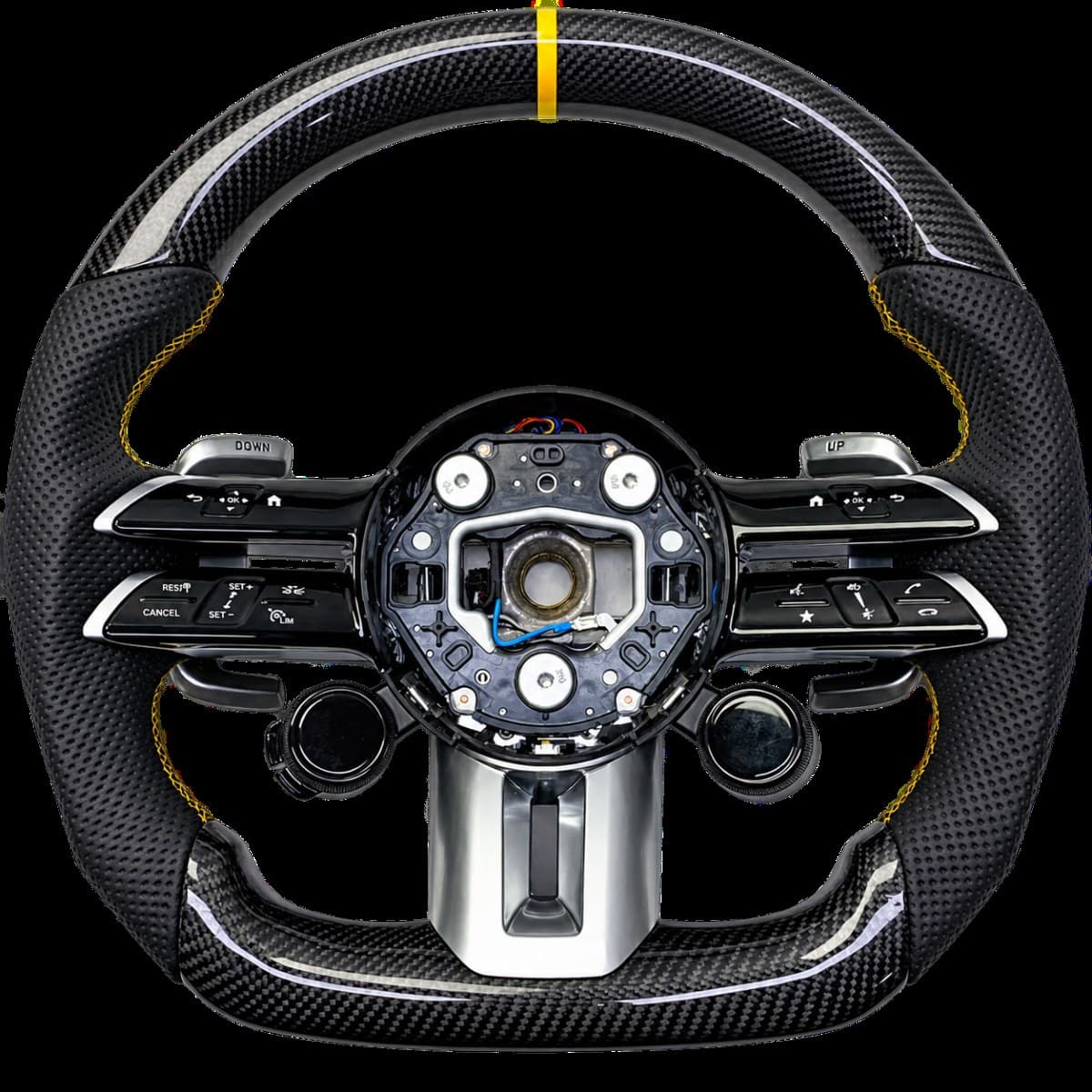
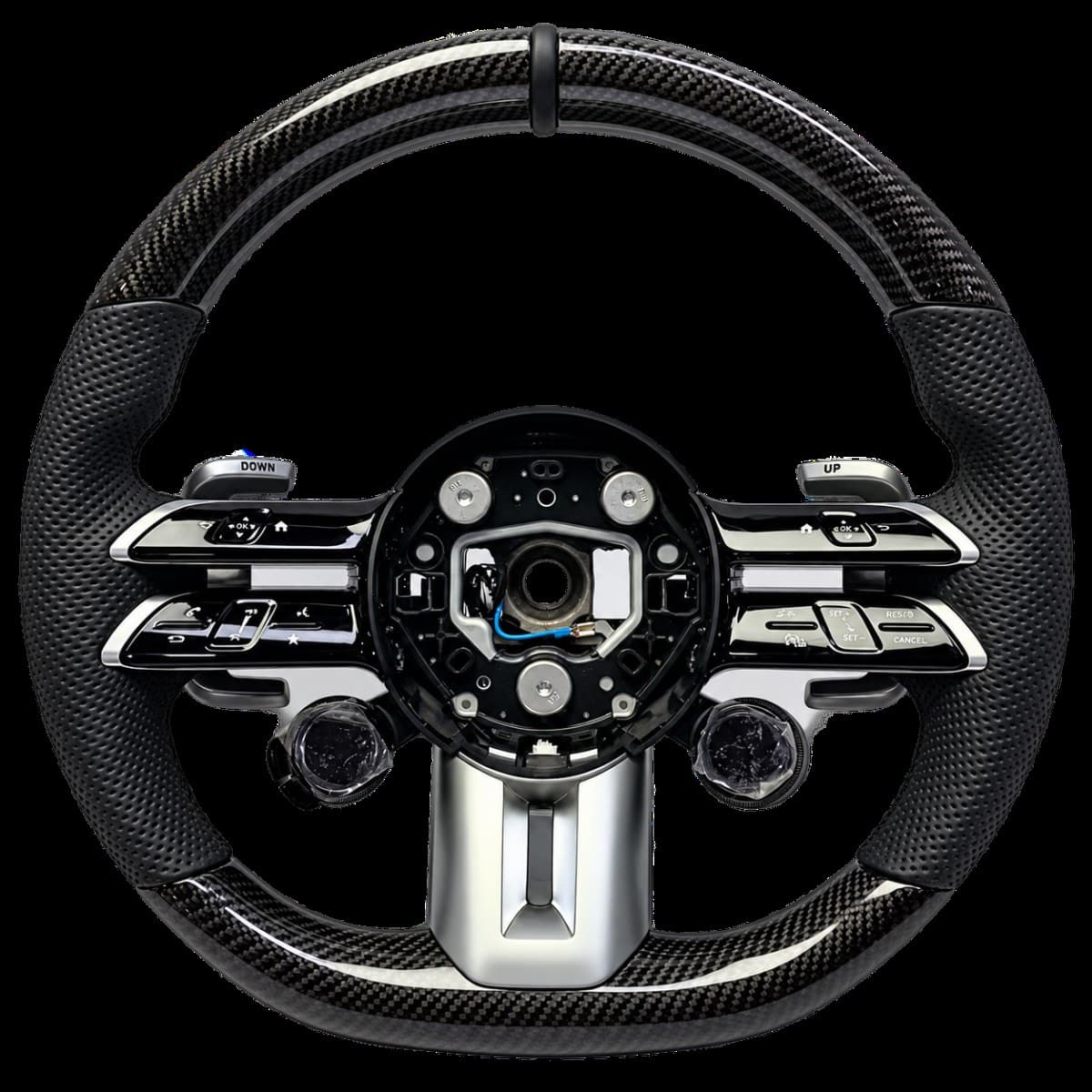
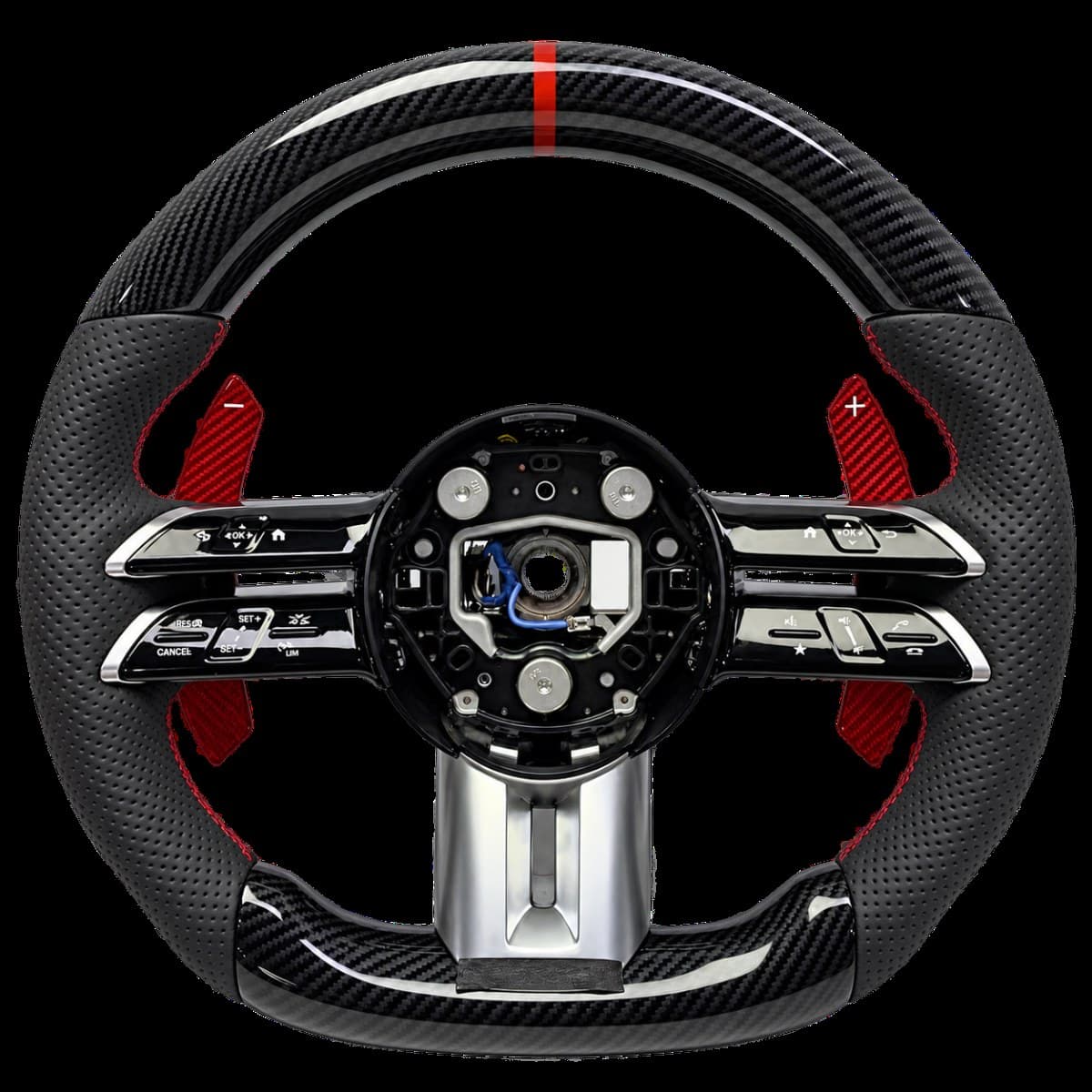
The regular woven style tends to show continuous, directional interlacing; as light moves, you see a repeating light-dark rhythm with an orderly feel.
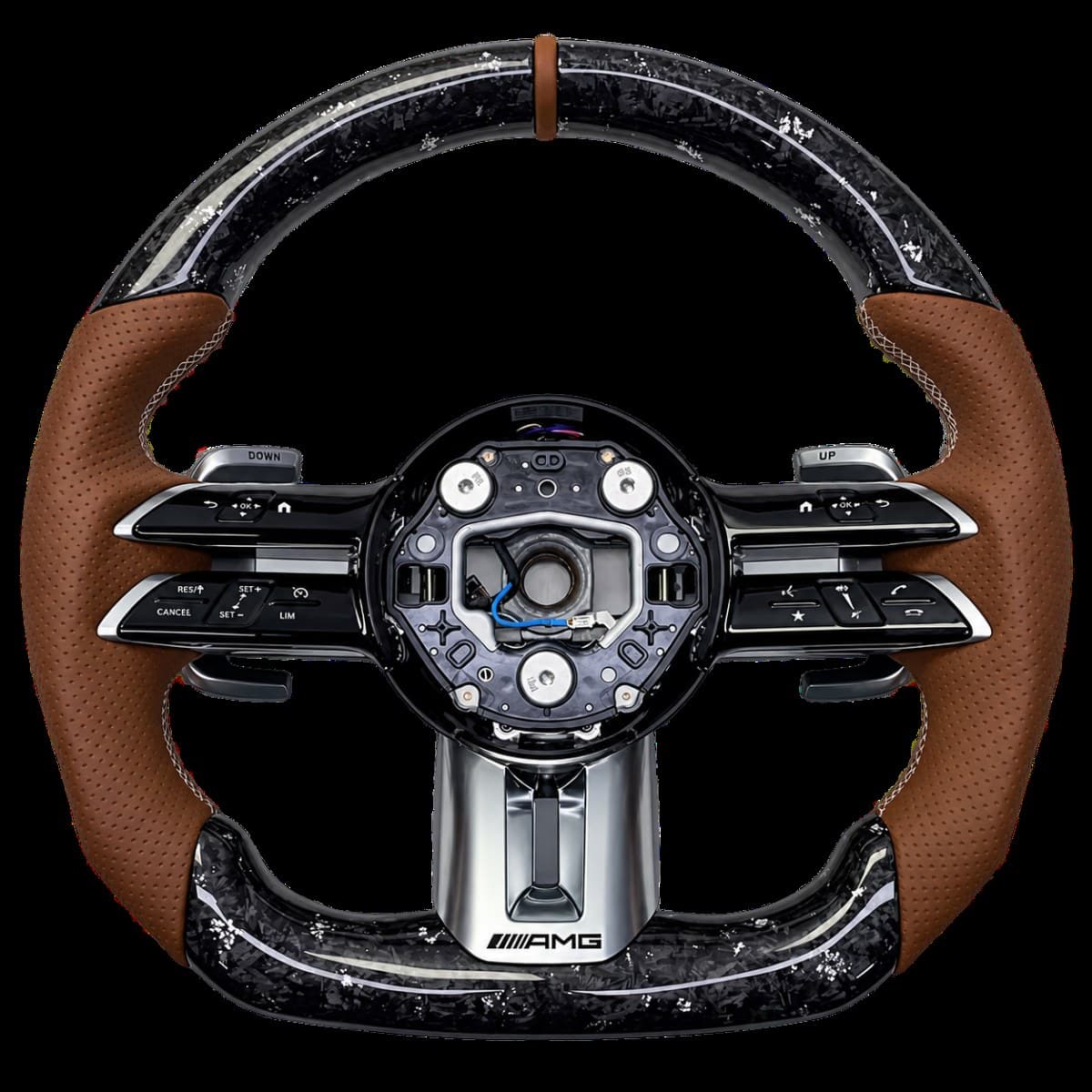
The irregular flake style has strongly varied directions, with a fragmented or marbled effect. The market sometimes calls this forged carbon or forged carbon look, but decorative film, painted patterns and composite materials can all produce a similar appearance. In formal purchasing, ask the supplier to state clearly whether the product is “a certain textured appearance” or “a specific composite material structure.”
2. How to read TUTULE texture samples
Your samples RM:017, RM:018, RM:019 and RM:020 differ in brightness, flowing texture and pattern density. They can initially be used as visual design sample codes, but a photo alone should not define any code as forged carbon fiber, wood grain, composite resin or a specific manufacturing technology. Final material selection should combine physical feel, the supplier’s material documentation and surface-durability test information.
3. Do not replace performance verification with appearance
A steering wheel is involved in driving control and may connect to safety-related systems. If a supplier claims a texture is “lighter,” “stronger,” “heat-resistant” or “will not fade,” ask what it is compared against, which test method was used and under what conditions the claim applies. A decorative texture photo cannot prove impact resistance, nor whether the part carries any structural function.
In particular, distinguish these layers:
- Load-bearing core: the part that affects overall structure—never judge it from surface appearance alone.
- Decorative finish: creates the texture, color and gloss.
- Clear or other protective layer: relates to gloss, cleaning and abrasion.
- Grip wrap zone: determines the feel where the hands contact the wheel.
Check your favorite texture in the customizer
See how different textured finishes look in the TUTULE customizer, or contact us for physical sample records.
4. Three actions before choosing a texture
First, place the candidate samples under the same lighting to avoid misjudgment caused by different shooting conditions. Second, define where the texture will be applied—upper rim, lower rim or other specified zones. Third, confirm the overall effect together with leather, stitching and the center marker, rather than judging an isolated texture swatch.
5. What to ask the supplier
| Question | Why it matters |
|---|---|
| Pure appearance style, or a specific composite? | Prevents mistaking a pattern for a material structure |
| What is the sample code? | Avoids texture mix-ups at order time |
| Can you provide natural-light photos or physical samples? | Reduces gloss and color deviation |
| Which application positions and limits apply? | Assesses process feasibility early |
| How should it be cleaned and maintained? | Prevents damage from improper care |
FAQ
Does an irregular texture automatically mean forged carbon fiber? Not necessarily; material and process documentation are needed.
Which texture is better for daily driving? Texture type alone cannot answer that—consider the grip zones, surface treatment and actual use requirements.
Are RM codes an international material standard? They should not be understood that way. Without the supplier’s technical documents, treat them as internal sample identification codes.
Next step: Send TUTULE your preferred texture codes, vehicle information and desired colors so the visual sample can be confirmed before discussing a buildable product plan.